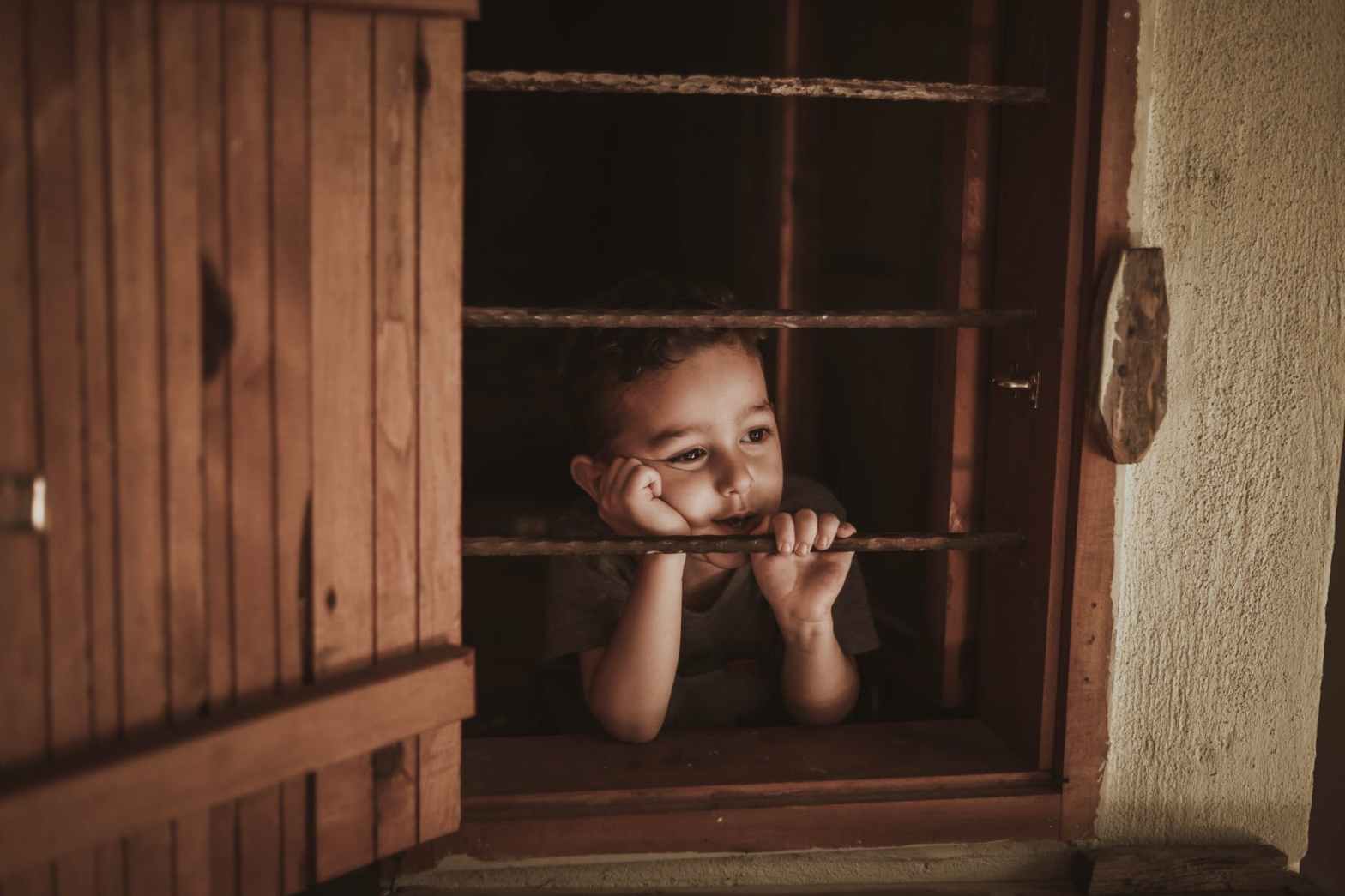
9 Things Single Moms Feel

Becoming a single mom creates new burdens and triggers new emotions. Today I’m sharing 9 things single moms feel.

1. You flinch when someone says she’s a single mom because her husband is out of town or working long hours.

Before I became a single mom, I used to say this, too. We flinch because we’d love our single parenting to be temporary! If only a spouse would walk through the door after a long business trip or overtime work hours. Many single moms parent alone 24/7 or pass weekends, birthdays, and holidays alone while their kids are with the other parent. When someone throws out the single mom comment, extend grace by overlooking it or help them understand by smiling and saying, “Welcome to my world!”

2. You bottle up way more than you let on.

There’s no shoulder to cry on when life gets rough and no spouse to whom you can text that funny story. Most of it stays bottled up, rattling around in your thoughts and heart, as you fight to be present in your parenting and responsibilities. Two things have helped me: daily journaling to brain dump or unleash most of my thoughts and meeting a friend regularly for conversation.

3. You look stronger than you feel.

You look strong to those around you because you’ve learned to manage the house, fix the broken dryer, juggle sports and dinners and homework while mothering alone. Outsiders think you’ve adjusted to your new normal but inside, you don’t always feel strong. Ask for help when needed, like help picking up your kids from school or practice.

4. You worry about the future.

Single moms carry near-chronic worry about the future. We worry about how the death or divorce of their father will affect our children. We worry about finances. We worry about all the things we never get to because we’re one doing the job of two. Prayer is the best way to win over worry.

5. You need time away more than you realize.

Goodness knows it’s hard for a single mom to get away by herself because there’s no spouse to watch the kids and a looming to-do list, but self-care helps us parent better. Carve out time alone at home or an evening out with friends to let yourself reset and refresh.

6. You feel vulnerable away from your kids.

I remember feeling this the first time I left my children for a weekend. My kids had already lost their father and they couldn’t lose me as well. But that fear only sets off a string of worries that keep us from our parenting best. Shift your perspective: it’s healthy for kids to have independent experiences and for moms to have time away.

7. You want to date. You’re scared to date.

Most single moms long for someone to grow old with and someone who cares intimately about them. But, the reality of dating is daunting and the thought of finding someone—let alone bringing him into the family—is intimidating. Allow yourself and your children to heal and focus on becoming the person you want to be rather than hyper-focusing on someone you long to meet.

8. You grieve what you wanted for your children.

This was not the way you dreamed it would be. As a single mom, you’re mourning multiple losses – a husband who died; a marriage that imploded; the future you envisioned; the kind of life you wanted for your children. Allow yourself to process the loss while you create beauty and purpose in the life you have now.

9. You fight stigma and statistics.

It happened again this morning. I filled out another permission slip and had to write “deceased” in the blank for father. Getting used to checking the box labeled divorced, widowed or N/A doesn’t make it easier. Then there are the statistics about children raised in single-parent homes. The truth is statistics don’t govern our home; we do.

How You Can Help Orphans

You have a part to play in ending the orphan crisis.
But where do you start? How do you make an impact? How can you help orphans?
These are fair questions, and they are natural questions to ask when faced with such a large, tragic crisis. But we cannot let the enormity of the orphan crisis create complacency.
We want to help you get over those big questions. Here are four ways you can help children living as orphans.

Get Informed
Knowledge is power. How can you work to end a crisis you don’t know about? And how can others around you join in this work if they have never heard about it?
Get informed about the orphan crisis. Read up. Study up. Learn the numbers and begin to grasp the global impact of this tragedy. As you learn, it’s important to remember: Each of those numbers represents a real person. This is a personal crisis, involving hundreds of millions of unique children.
We need to understand the orphan crisis as we work to end it, and we need to let other people know how serious this crisis is so they can join with us.

Donate
Money can be used to make the world a better place. When you donate to organizations that are doing good work, you are impacting lives. Donating certainly isn’t the only way you can help, but it is a great way to get involved.

Pray
Prayer matters. We love because God first loved us, and the work of orphan care is carried forward by his loving grace. As Christians around the world lift their hearts to God on behalf of the fatherless, we believe he hears.

Adopt

Adoption is the very best way to help a child in need of a forever home. Opening your heart to a child is the first step at making a true difference and opening your home seals the deal.

Seal the Deal

If you are interested in adoption, may I suggest contacting the Smoky Mountain Children’s Home located at 449 McCarn Circle in Sevierville Tennessee 37862 for more information. You can contact them at 800-654-1622. They can help you with adoption, fostering and residential care for those in need.

We believe God loves each of his uniquely created children.

4 Things the Bible Says About Orphans

God’s heart for the orphan is clearly displayed throughout the Old and New Testaments. Below is a short list of what the Bible says about children living as orphans.
1. All Waiting Children Have a Father
God is the great protector and loving Father of all children living as orphans. Psalm 68:5 says, “Father of the fatherless and protector of widows, is God in his holy habitation.” He who numbers the hairs on our head will certainly not turn away from the children living as orphans, and this should inspire us to act.

2. All Children Living as Orphans Deserve Justice
Deuteronomy 10:18 says, “He ensures that orphans and widows receive justice. He shows love to the foreigners living among you and gives them food and clothing.”
Also, Psalm 10:14 says, “But you, God, see the trouble of the afflicted. You consider their grief and take it in hand. The victims commit themselves to you; you are the helper of the fatherless.” Justice is a fundamental part of God’s character, as we are shown in the Bible. That even one child does not know the love of a family is a great injustice, and there are millions of children living in this reality.
God promises protection and help for those who cannot protect themselves, and he redeems injustice through his mighty love. He also asks us to do something about it. God invites everyone to play their part in working toward justice.

3. The People of God Will Care for Orphans
James 1:27 says, “Religion that is pure and undefiled before God, the Father, is this: to visit orphans and widows in their affliction, and to keep oneself unstained from the world.”
The words of the Bible call God’s people to actively pursue meeting the needs of children living as orphans, and a great place to start is through prayer.

4. The People of God Share Their Resources with Orphans
The following verse comes from a passage in Deuteronomy where God is instructing his people about tithing. Deuteronomy 14:29 says, “And the Levite, because he has no portion or inheritance with you, and the sojourner, the fatherless, and the widow, who are within your towns, shall come and eat and be filled, that the Lord your God may bless you in all the work of your hands that you do.”
People are called by God to remember children living as orphans in their giving.
As you consider how God may be calling you to care for children living as orphans, take heart. He who calls you to this work will be faithful to equip you for the work he has called you to.

“For the God who calls you is faithful, and He can be trusted to make it so.” — 1 Thessalonians 5:24

Dr. James C. Dobson

Dr. James Dobson is the Founder and President of Family Talk, a nonprofit organization that produces his radio program, “Dr. James Dobson’s Family Talk.” He is the author of more than 30 books dedicated to the preservation of the family, including The New Dare to Discipline; Love for a Lifetime; Life on the Edge; Love Must Be Tough; The New Strong-Willed Child; When God Doesn’t Make Sense; Bringing Up Boys; Marriage Under Fire; Bringing Up Girls; and, most recently, Head Over Heels.

Dr. Dobson served as an associate clinical professor of pediatrics at the University of Southern California School of Medicine for 14 years and on the attending staff of Children’s Hospital of Los Angeles for 17 years. He has been active in governmental affairs and has advised three U.S. presidents on family matters. He earned his Ph.D. from the University of Southern California (1967) in the field of child development. He holds 17 honorary doctoral degrees, and was inducted in 2008 into The National Radio Hall of Fame. Dr. Dobson recently received the “Great American Award” from The Awakening.

Dr. Dobson is married to Shirley and they have two grown children, Danae and Ryan, and two grandchildren. The Dobsons reside in Colorado Springs, Colorado.

Dr. Dobson is kidkrazydad’s  “go to”  source for all family and parenting issues.

Visit Dr. Dobsons website HERE

Morning Routines for Kids

Preschoolers are ready to learn about responsibility. They can take on chores and are often eager to please, but they need training in order to develop the necessary skills. Getting ready in the morning is often a great training time for children. They can learn to complete assignments, manage themselves, and take initiative to get things done.

Unfortunately, parents sometimes miss training opportunities by doing more for kids than is necessary and by allowing them to rely too much on parental prodding in order to move forward. Here are some suggestions for getting the most out of your morning experience whether you are all headed out the door or if you are home for the day.

CLARIFY EXPECTATIONS

Take some time and sit down with your child and explain the plan for the morning. If you have a specific time to be out the door, explain that as part of the challenge. If you aren’t leaving the house, set a time and help kids understand that you are moving along toward a goal and a clock is part of the motivation. Even though most preschoolers can’t read a clock, they do understand the urgency associated with a time crunch.

Next, identify the tasks that your child needs to get done including getting dressed, putting pajamas away, eating breakfast, and taking care of bathroom things like combing hair and brushing teeth. You might also want to add things like making the bed, feeding the dog, and cleaning up the breakfast dish.

WE ARE ON A MISSION

Teach your child that, in the mornings, we’re on a mission to be ready for our day. That means that the primary job in the morning is to complete the tasks, help others do the same, and be ready to go out the door or to start the day’s events. Some children believe that their primary goal in the morning is to watch TV, play with toys, or go back to sleep. In part, you’re changing the beliefs that a child has for mornings, but you’re also helping your child develop the early foundations of responsibility. You can define responsibility in a number of practical ways for kids but basically it’s an uncomfortable feeling that I have a task to complete before I’m free. The way you handle morning times can help your child develop that discomfort associated with maturity.

Don’t use yelling to accomplish activities in the morning. Raising your voice increases a different feeling of discomfort and it’s unnecessary and counterproductive. Instead, view the mornings as small missions of responsibility, each one focusing on a reasonable task. One way to increase responsiveness is to get close to a child before giving the instruction. It does little good to tell a child to get his shoes on while he’s engrossed in cartoons or his favorite game. It’s better to call the child over first before you give the assignment. You might get close to a child, obtain eye contact, and say, “Al, it’s time to get your shoes on. Please go get your shoes and bring them to me and report back.” When you require your child to report back, you’re developing accountability, an important part of responsibility training.

” Start with basic self-care and then move to other chores “

When Al returns, offer encouraging words and then have him put his shoes on right there near you and report back. Then continue the tasks until you’ve made it through your list. Work through the same process of calling the child over, giving the task, and requiring the child to inform you that the assignment is done. Start with basic self-care and then move to other chores and ways that your child can contribute to the family such as making sure the bathroom is orderly or that the dog has food.

When the child has completed the required assignments then it’s important to release him by saying something like, “You’ve done a good job. We have about 15 minutes of free time before we walk out the door. You can now enjoy your toys for a bit. I’ll let you know when it’s time to clean them up so that we can leave.” The release you give your child is an important part of responsibility training. You not only want the child to feel the discomfort of an unfinished task, but you also want to encourage the feeling of freedom when the tasks are complete.

BUILD INITIATIVE

As your child develops more responsibility then you’ll want to add initiative to the training process. Initiative helps children be more independent and not rely on the parent to provide the continual prompters to move forward. You might create a chart that a child checks off each morning. Now your words change from small missions of responsibility to calling for quick updates of accountability. “Al, please come and give me an update. I want to hear how you’re progressing on your chart.” Moving to this level of responsibility training is important because it reduces the reliance on parental prompters and moves children toward internal motivation.

“you’re using the daily activities of the day to build character”

Parents using this kind of approach in the mornings see significant results in their kids at other times in the day as well. You may continue a similar plan when you come home, or in the afternoon chore time, or as you’re moving toward bed. The reality is that you’re using the daily activities of the day to build character and strengthen a child’s heart.

The Bible compares our Christian lives to running a race. It has a goal and the new patterns require work. It may be helpful to look at your morning routine as part of your calling before God to run the race with purpose. Hebrews 12:1-2 says, “Therefore, since we are surrounded by such a great cloud of witnesses, let us throw off everything that hinders and the sin that so easily entangles, and let us run with perseverance the race marked out for us. Let us fix our eyes on Jesus, the author and perfecter of our faith, who for the joy set before him endured the cross, scorning its shame, and sat down at the right hand of the throne of God.” The passage encourages us to be responsible, do the right thing, and persevere. That’s a great encouragement for our kids both now and for the rest of their lives, and it starts right now the way we handle our morning time.

Having a Covenant Relationship with Your Child

A covenant is defined as an agreement or contract between two or more parties where they agree to do or not do something. Both parties have clear obligations and responsibilities.  There are several famous covenants expressed in the bible. There was God and Noah, God and Abraham, God and Moses, all pointing us to the most important covenant of all. That covenant is between God and ALL people through His son Jesus Christ.

What about the relationship between us and our children?   Our kids are growing up in an ever-increasing secular world where values, Christian values, are under constant attack. If we are to guide our children through this jungle of distortion, we need a set of hard and fast rules to live by. We need to agree that there is a standard to uphold. We could write them down on stone tablets or we could use an almost forgotten way to communicate, “Sit down at the table and engage one another!”

We need to sit down, discuss our goals as a family and document them in writing. We need to establish a set of values that we as a family can agree to. Here is my list of suggestions in drafting a covenant.

1. Accept one another-   We must become good listeners. We must be willing to hear each other out without becoming judgmental or shutting each other down without a hearing. We must truly listen to one another and value one another as an important part of our family.

2. Be available-   We will agree to unplug from the world and give each other sufficient quality time. We will be totally present in each others company .

3. Be supportive-   We will take care of each other and help each other with our daily tasks when needed. We must encourage one another and affirm each other DAILY!

4. Be honest-   We will learn to trust one another because trust is vital in developing a strong covenant. If we are truthful with one another, our covenant relationship will have a strong foundation. If we lose trust in one another, our covenant may fall apart and regaining our trust will be difficult. We must not lie to one another.

5. Be respectful-   We will respect each others position in the family. As the parent, I am the authority figure with the RESPONSIBILITY of leading you with your best interest at heart. You must respect my leadership. I must respect you as the gift that you are and the blessing you bring to our family. Your feelings and opinions matter to this family.

6. Show honor-   Our family honor will reflect our relationship with our heavenly father.You are just as important to this family as I am.  We will honor each other in mind, body, soul, and spirit

7. Understand there are consequences-   We will agree that failure to honor our covenant will include consequences. We will love one another enough to set boundaries and righteously deal with our failures to uphold our covenant.


“There are three key principles that we should keep in mind in drafting our covenant.”

  1. Unconditional love-   We must assure our children that they are loved every day regardless of how they “perform.”  They must also understand that this type of love does not condone bad behavior. We must be willing to discipline them accordingly. The writer of Hebrews 12:11 says, “For the moment, all discipline seems painful rather than pleasant, but later it yields the peaceful fruit of righteousness by those who have been trained by it.”  Righteous discipline is Love!
  2. Reliability-   We MUST be there for our children no matter what. When we combine unconditional love and reliability, that strong trust previously mentioned will be established.
  3. Honesty-   I must stress once again the importance of honesty. If you expect your child to be totally honest with you, you need to first be honest with them. It means you must admit your mistakes and apologize for them. Sometimes it means sharing your deepest hurts. This kind of transparency will make you seem real and relevant to their life experiences. We must of course consider their maturity level and only share what they are capable of processing in their young minds.

A covenant relationship is binding.  I recommend putting some serious thought and prayer into drafting your own family covenant. Know the strength’s and weaknesses of each member before finalizing your draft. Make it both practical and realistic. Don’t make vows or set rules that you are not willing to live by yourself or enforce on your family.

Most importantly, include God and seek His will for your family before writing up your covenant. I also suggest a family meeting to discuss the issues you will include and explore your families hearts ahead of time.   I am sure that even your “little ones” have something of value to “bring to the table.”


The Reward is Worth the Pain

You have heard people say that they have a “cross to bear.” They usually are referring to some burden they must endure. It could be a sickness, a rebellious child, an unfulfilling job, an addiction, or a chronic disease. Jesus’ comments about bearing a cross really only meant one thing, “suffering and death”. His cross was a place of both! To hear those words are a bit frightening but the “Reward is worth the Pain.”

In Christ we are reborn spiritually but we will bear the burdens “of the flesh” until we either die or Jesus comes back again. In bearing the burdens of the flesh, we are sharing in the same suffering Christ endured. His suffering was due to acts of cruelty at the hands of others and a consequence of living in a fallen, sin filled world. I want to speak to this term in it’s proper context.

In Matthew 10: 38-39, Jesus says, ” He who does not take up his cross and follow after Me is not worthy of Me. He who finds his life will lose it and he who loses his life for MY SAKE will find it.” In this passage, Jesus is sending out His disciples, teaching them about the fear of God, and preparing them for what they would encounter. Then there is chapter 16. In verses 24 and 25 Jesus adds another component. It is self-denial. He says that “If anyone desires to come after Me, let him “deny himself, take up his cross and follow Me.” What Jesus is teaching them here is about discipleship!

“There are 3 laws at work here in becoming a disciple”

1- Law of self-denial- “let him deny himself”

2- Law of sacrifice- “take up his cross”

3- Law of submission- “follow Me”

“The Lord does not just leave them with these responsibilities. He qualifies them by pointing out the “rewards” that belong to those who are disciples.”

1- PERMANENCE of discipleship- “For whoever desires to save his life with LOSE IT but he who loses it WILL GAIN IT” meaning that joy and fulfillment are found when we exchange our will AND our lives for the life of Christ.  We will always belong to Him.

2- PRICE of discipleship- “what profit is it if a man gains the whole world and loses his own soul?”  We all only get one chance to live by faith as believers. We get the chance to live abundant lives. It is truly PRICELESS!

3- PRIZE of discipleship- “He will reward each according to his works.”  We will receive an incorruptible crown!

When we become a disciple, we belong to Him. God will redeem all our mistakes, hardships and suffering whether due to our own sin or that of others. The reward is worth the Pain!

REVELATION: It is still hard to understand why we must endure suffering at times but just as Jesus endured it for me, I must be willing to endure it for others! WOW what a revelation!!!   That’s brings the second greatest command to love others as He loved us into a little clearer perspective now, doesn’t it!

With that in mind, the purpose for my suffering, my cross, becomes clearer. The crosses that I must carry become BRIDGES FOR OTHERS PAIN! Perhaps this is what Paul was talking about when he admonishes us in 2 Corinthians 1:4 to “…comfort those in any trouble with the comfort we ourselves receive from God.”  It helps them find hope, despite THEIR SUFFERING and helps lead them to the foot of Jesus’ cross!

It’s not easy carrying crosses or loving people the way Jesus did but oh so worth it! The reward is worth the pain…

Are you equally yoked?

The term originally referred to a pair of animals that couldn’t work together to pull a plow. One animal may have been weaker or failed to listen to the farmer, which created problems. As relating to people, it indicates incompatibility or relatability in our relationships. It doesn’t just refer to spiritual incompatibility, which causes conflict, but impacts a couples individual approach to everyday life and especially parenting a child.
I highly suggest that in choosing a mate you should become aware of and sensitive to their spiritual beliefs and connection to Christ BEFORE you take the plunge into marriage. Amos 3:3 asks the question, ” Can two walk together, except they be agreed?” That’s one of the most important questions we will ever have to ask. It could make or break us. It is key to having a joyous and rewarding family life.
Being equally yoked is not meant to inhibit our dating lives. Rather, it is a command for protection and honor. Being unequally yoked is more dangerous than you think and waiting for someone with whom you share the same spiritual heritage is FAR more rewarding than one can imagine.
If you do find yourself in this type of relationship, know that you are not alone. Many couples find themselves in this exact same situation. There is ALWAYS HOPE! “ALL things are possible through Christ!” If you find yourself in this situation it is important to join yourself together with a community of individuals who are or have walked this journey.
There is comfort within the body of Christ! There is comfort in the Word of God! Short of physical abuse or endangering your children, if you have made the decision to marry unequally yoked, hang in there. Pray for your spouse. Shine the love and hope God placed within you to your mate EVERY DAY !
You just may win them to Christ through your spiritual commitment and love for them..

By Rex A Lones

How To Teach Your Child To Overcome Anxiety

We all get caught up in worrying over things in which we have little control. Anxiety defined is, “intense, excessive, and persistent worry and fear over everyday situations.” As a child grows, anxiety becomes a normal response in stressful situations such as taking a test, dealing with a bully or being accepted by their peers, etc.. Anxiety then becomes an indicator of underlying issues where feelings become excessive, all-consuming and interferes with their daily living. Signs of anxiety may show up as physical or behavioral changes and usually are brought on by stress.

We must learn as parents to recognize the signs of childhood stress and look for the causes. This means we need to engage our children daily to help them manage their stress. If you see them having difficulty concentrating, showing changes in their behavior, withdrawing from family, or developing nervous habits, it is a good indication that they are stressed out and becoming anxious. Major life changes such as divorce, death in the family, moving, or even the birth of a new sibling can many times bring on great anxiety for your child. These events may rock their world and shake their sense of security. Here are a few first step suggestions at helping your child to cope:

1- LISTEN AND WATCH THEM CAREFULLY

Take the time to carefully and intentionally observe their behavior

2- PRAY FOR DIRECTION

Ask God to show you the best way to help your child as soon as the symptoms arise

3- PROVIDE THEM WITH SOME “DOWNTIME” REGULARLY

Don’t just give them “time-outs” but encourage them to write down their feelings on paper

4- MAKE YOUR HOME A CALM, SAFE AND SECURE PLACE

Commit to a routine of technology-free family dinners or game nights to “disengage” their young minds from their stressors

5- MONITOR THEIR TELEVISION SHOWS, VIDEO GAMES AND READING MATERIALS

It’s a good idea to not just restrict certain content but the time spent on each

6- KEEP YOUR CHILD INVOLVED IN THE DIRECTION YOU ARE TAKING AS A FAMILY

Give them a “heads-up” on any anticipated changes or expectations and walk them through any new scenarios

7- GET YOUR CHILD INVOLVED IN SOCIAL AND SPORTS ACTIVITIES

Help them find activities that fits them and gives them the greatest chance of success

8- ALLOW FOR OPPORTUNITIES WHERE YOUR CHILD CAN HAVE A DEGREE OF CONTROL OVER A SITUATION

This can empower them and is an opportunity to learn constructive decision making

9- PROVIDE YOUR CHILD WITH HUGE AMOUNTS OF AFFECTION AND ENCOURAGEMENT

Repeat, repeat, repeat !!!!!

10- LEARN TO TRULY LISTEN TO THEM WITHOUT BEING CRITICAL OR SOLVING PROBLEMS FOR THEM

Listen, offer suggestions and lead them to the answer and let them make it theirs


My last but maybe most important suggestion is to regularly direct them in their spiritual growth. Help them to understand that it’s okay to have concern over their life circumstances BUT that worrying is not only dangerous to their overall health but will provide them with no concrete solutions. The difference between concern and anxiety is that concern ACTS with reason, empathy and faith, where anxiety REACTS with fear, doubt and discouragement.

The key ingredient here is HOPE! Never allow your child to sink into a hopeless mindset that may encourage self-destructive behavior. Far too many children are lost every day due to hopelessness. Help them learn how to battle anxiety in the battlefield of their mind. Speak faith, HOPE, and love into them daily! Teach them the promises that God has made to them regarding anxiety and fear.

My favorite bible verse in learning how to battle anxiety comes from Philippians 4:6-7.   “DO NOT be anxious about anything but in EVERY situation, by prayer and petition, WITH thanksgiving, present your requests to God and the peace of God, which transcends all understanding will guard your hearts and minds in Christ Jesus.”

Speak this verse to them OFTEN! Let it become a reality to both YOU and YOUR CHILD! This may become a perfect opportunity to ENGAGE your child in a “mini” bible study without overwhelming them. I also suggest that you define the dynamics (as simply as possible) and then engage them in a short time of questions and answers. Remember that to “engage” someone is to speak AND listen. Pay close attention to the phrases “by prayer and petition”, “present your requests”, and “guard your hearts” and learn the meaning of them clearly so as to effectively communicate them to your child. Try to also help them understand what it means to do it “with thanksgiving.”

God loves a thankful heart! (Don’t we all?)   This will empower them with tools in their “quiver” to battle the enemy of their hearts and minds with the sharpest, most powerful weapon IN THE WORLD, God’s word!!! Be blessed. YOU CAN DO IT !!!


How to cope with friends that turn against you

37206616_10215406051398202_3649965093354995712_n (2)

By Rex A. Lones

One of the downsides of friendships is the potential for a friend to backstab or betray you. The closer they are to you, the worse the pain. When a friend turns against you, it may hurt you deeply, especially if this person is someone who you have repeadedly reached out to in love and supported them when they needed a friend. Coping with friends who turn against you requires compassionate attention to your own emotions as well as closely considering the status of the current relationship and moving forward accordingly. Learn how to care for your hurt feelings and handle a disloyal friend, too.

Here are some things that I have learned and am still learning…

Acknowledge the pain of disloyalty. It hurts to have someone turn against you or to find out someone you thought was a close friend may not really be who you thought. It’s normal to be upset and there is no need to hide the fact that you are hurt.

1-Acknowledge the pain by naming the emotion that you are feeling and own your reaction to it. “I am disappointed because I placed my trust in someone who backstabbed me -or- lied to me.”

-While you can acknowledge the feelings, remember you are the only one who controls how you react to this disloyalty. In some cases, this person may be treating you a certain way with the hope that you will react in a big way. That doesn’t sound like a “friend” but it does happen. It is far better to take a step back and reflect on how you are feeling, instead of acting out in the moment.

– 1 Corinthians 15:33 warns us to not be misled and remember that “Bad company (friends) corrupts good character” so choose your friends wisely.

2-Take time to reflect. Just as some romantic relationships benefit from a break, friendships can also benefit from time apart. Take this break to think about any major choices like confronting the friends or completely ending the friendships. You may find that you calm down after a few days, or you may find that during the break you actually feel better without the friends.

-You can also use this time to consider opening yourself to making some new friends who are more supportive. Spend time with a few other acquaintances, classmates, coworkers, or fellow church goers. Do you notice yourself liking being with these people over your other friends? Do you notice good qualities in these people that your other friends lack?

-Another way to engage in reflection is to journal. Writing down the experience and your thoughts and feelings associated with it can be incredibly freeing and empowering. You can even brainstorm ideas as to how you want to deal with the aftermath of a friend’s betrayal.

-Proverbs 13:20. “Walk with the wise and become wise, for a COMPANION of fools suffers harm.”

3- Practice regular self-care. Before you can even think about rebuilding trust with your friends, you have to first take care of you. We often put our own feelings on the back burner to avoid feeling bad ourselves or to avoid making others feel bad about their actions against us. Denying yourself time to care for your own needs does not lend itself to creating long-term, healthy friendships.

-Forgive yourself for taking a chance on the friendship, if you must, and allow yourself whatever feelings you had in the moment after you found out about the betrayal. When someone steals from you or goes behind your back to do something, it is easy to beat yourself up over letting anyone have the chance to use you.

-Treat yourself kindly during this time. Do things you like to do—whether binge-watching your favorite TV series, going for a long quiet drive, or spending time with family.

– Be very careful not to do self harm by engaging in destructive behaviors such as drinking or other compulsive behaviors to numb your aching heart because that will ultimately do much more harm than good.

– Remember the second greatest command that Jesus gave in Matthew 22:39 to “Love your neighbor as yourself.” This DOES NOT imply that you love yourself first and your neighbor accordingly. It simply means that we are to love others as Gods children and that includes ourselves. It’s pretty straightforward, it is assumed that we love ourselves as a part of the human family. The Apostle Paul put it this way in Ephesians 5:29, “After all, no one ever hated his own body, but he feeds and cares for it, just as Christ does the church.” That being said, in Matthew, Jesus was emphasizing how important it is to love your neighbor.

4-Be the bigger person. Don’t entertain urges to get revenge or hold grudges. Try to forgive those that do you wrong, if only so you don’t have to carry the burden of anger. You may feel like you are letting the other person off too easy if you let go of the anger and move on. This is not the case. Holding onto the anger hurts you first and foremost. In many cases, the person you are angry with has already moved on. They could care less. You take back your power by being the bigger person and not reacting in a vengeful way.

-Keep in mind that you can’t control what other people do or say about you. Getting angry and nasty will not make you have any more control than you have now. And in the end, if your actions are not in line with your character or beliefs, you will likely feel ashamed or guilty for have acted outside your values.

-The old saying “fight fire with fire” really makes little sense in reality. You normally fight fire with water or something else that puts out the fire, right? Don’t fuel the fire with your own negative actions because all that happens then is a much bigger fire.

– When our flesh is screaming for recompense, our best response is to follow Romans 12:21 and ” Do not be overcome by evil, but overcome evil with good.”

5- Hang out with fun and supportive friends and family. It can be extremely comforting after betrayal to surround yourself with positive people who want nothing but the best for you. This not only helps you process and cope with a betrayal, but it also reaffirms your value as a person and a friend.

-For example, if one friend lets you down, be sure to cherish your other friends who have consistently been loyal to you. Let these people know how much you appreciate them.

– I got 2 here. Proverbs 13:20, “Walk with the wise and become wise for a companion of fools suffers harm.” AND MY favorite, Ecclesiastes 4:9-10, ” Two are better than one because they have a good return for their labor; If either of them falls down, one can help the other up. But pity anyone who falls and has no one to help them up.”

6- Evaluate your friendship. When a friend who knows you well turns against you, it may affect your personal, social, or career standing. Depending on how much of an impact the rumor or betrayal may have had, you must decide if it’s better to ignore it or address the issue. Sometimes you just got to let it go, especially if it just amounts to a petty annoyance.

-If the problem is simply with the one friend involving a minor issue, it’s probably pretty safe to just ignore the friend. On the other hand, if your job is at risk or there are allegations that go beyond a small rumor that will blow over, you may need to take other steps to prevent the situation from getting worse.

-Is everyone talking about the issue? Are there legal ramifications? How many people are aware of what happened? Asking these questions can help you discover the scope of the problem.

-It may be helpful to talk with an unbiased party about what you can do to resolve this issue. In the end, you must trust your own judgment about how to handle it, but getting some sound advice could be beneficial.

7- Combat negative effects. If the friend who turned against you spread rumors or bad-mouthed you to others, try to do what you can to counteract those negative perceptions of you.

-You can try defending yourself or approaching certain people and trying to explain your side of the story with something like “Those rumors are not true…” Be aware, though, that there is always a chance people won’t want to listen.

-Actions speak louder than words and may help you to repair your reputation much faster. Instead of wasting time trying to talk your way out of a rumor, use positive actions to show those around you the rumors are simply not true. If people called you a cheater, try to be transparent about your everyday operations to shut down the rumors.

-Always remember that “Love covers a multitude of sins.” 1 Peter 4:8

8- Decide whether or not to confront the person. There are going to be times when you need to say something and there are going to be times where you can just let whatever happened go. Use your judgment of your friend and the situation to determine if a response is necessary.

-Think about the positive and negative consequences of confronting someone who hurt you. If you just drop the person as a friend, you will never have a chance to hear his side of the story and potentially clear up what may be a simple misunderstanding. You will also have the opportunity to express how you feel. On the other hand, the person may become verbally abusive or combative, leading to more hurt feelings.

-If whatever happened between you and your friend seems out of character for him, this might be a time to practice some compassion and just let things go. This will be even truer if you know the friend is going through something and may have turned against you out of desperation.

-Listen to Gods Spirit within you. A petty annoyance is one thing but if the betrayal came as a result of someone wrongfully judging you or came from a spirit of bitterness or jealousy, there is a very dangerous heart condition at work in your betrayer. IF not dealt with, the person could go on to hurt others and we DO have a responsibility before God and to others to deal with the issue. It is also in the betrayers best interest to address their sin. At that point “Letting it go” is BAD advice! The bible gives very clear direction on how to deal with this type of friend.

– In dealing with a sinning brother -OR- sister, and being judged unrighteously or treated disrespectfully as well as other acts IS a sin, Jesus admonishes us as follows. “If your brother sins, go and show him his fault in private; if he listens to you, you have won your brother. But if he does not listen to you, take one or two more with you so that by the mouth of two or three witnesses every fact may be confirmed. If he refuses to listen to them, tell it to the church; and if he refuses to listen even to the church, let him be to you as a gentile and a tax collector.” THIS is the protocol established by Jesus Christ Himself.

9-Determine if you want to repair the friendship. This process is usually tied to balancing how much value you place in the relationship and what actually occurred. You may need to take a close look at this friendship and see if it’s worth fighting for. If the friend is not someone you consider to be close, it might be less stressful to walk away. If, on the other hand, this is a friendship you value, find a way to address the issue in a constructive yet firm way.

-Even if this is a friendship you really value, there may be actions so unforgivable that the friendship will not recover. Before you take matters into your own hands, you must be absolutely sure the friend is responsible. Gather evidence that supports your findings before deciding to end the friendship. For example, if there is talk that your best friend is involved with your significant other, you would want to be 100% sure before making an accusation.

– Proverbs 17:17, “A friend loves at ALL times and a brother is born for a time of adversity”

 10-Mend the friendship if you want or can. Make recommendations for how the person can prove her loyalty again. Take a step back and look at what caused your friend to turn on you. Was a friend at work feeling jealous of your accomplishments so she lied about the credit for your work? Take this as a compliment and create an opportunity for the friend to come clean and acknowledge your work.

-Let your friend know that you do not take forgiveness lightly. Say something like “I forgive you and want to move on from this situation. But, I want you to know that you really hurt me and I may not be able to continue the friendship if this happens again.”

-Set clear boundaries with your friend so he or she understands why you are putting whatever happened behind you. She should know that going forward you expect total loyalty so there is no opportunity to let it happen again. For example, if this was a work project, going forward use a new system of dividing up the work so each team member clearly has his or her own “part”. If the issue came up at home, change the level of access this friend has to your home so there isn’t a way for this to happen again.
– Proverbs 27:17, “As iron sharpens iron, so one person sharpens another.”

11- Focus on your own behavior. Strive to be a better friend so you attract more loyal friends. Look at the healthy friendships you have mutually enjoyed and learn from those. Learn to be a better you by not allowing yourself to get caught up in drama at work or at home. Let go of unhealthy relationships

-Do not get caught up in a toxic circle of doing negative things because others do them. You will not find friends that are trustworthy if they cannot trust you. When you say you’ll do something, do it. If you make plans with others, follow through with them. Doing small deeds can go a long way to helping you build trustworthiness.
– “Romans 12:18, “If it is possible, as far as it depends on you, live at peace with everyone”
– 1 Corinthians 11:28-29, “But let a man examine himself, and so let him eat of the bread and drink of the cup. For he who eats and drinks in an unworthy manner eats and drinks judgment to himself, not discerning the Lord’s body.”

12- Consider the type of friends you tend to make. The only thing you have absolute control over is you. You get to decide how you react to certain people and who gets space in your life. You do not have to remain friends or even friendly with someone just because you were friends since you were kids or you happen to work in the same office.

-If you find work friends are harder to trust because of competition at work, make clear boundaries about not bringing work home. You do not have to be friends or social with co-workers if it is only leading to problems at work.

-The same goes for friendships you make in other settings. Are these people positive influences? Are they using you? Look at the types of friends you have and the kind of friendship obstacles you encounter. Maybe it’s a good idea to reevaluate all your friendships to see if you are making smart, healthy choices in your relationships.

-Proverbs 12:26, ” The righteous choose their friends carefully, but the way of the wicked leads them astray.”

13- Don’t compromise your personal values for friendships. This includes hiding things about yourself or family just to keep certain friends. You may find friends act differently in certain contexts and that you cannot always depend on certain friends to be consistent. If you lose a friendship because you need to focus on family, then it wasn’t a healthy relationship to begin with.

-This also includes ignoring the actions of a friend in the name of friendship. You have the right to stand up for your beliefs. In addition, you should not be pressured to look the other way if a friend does something you feel is wrong or violates the law of GOD or man.

-James 4:4, “You adulterous people, don’t you know that friendship with the world means enmity against God? Therefore, anyone who chooses to be a friend of the world becomes an enemy of God!”